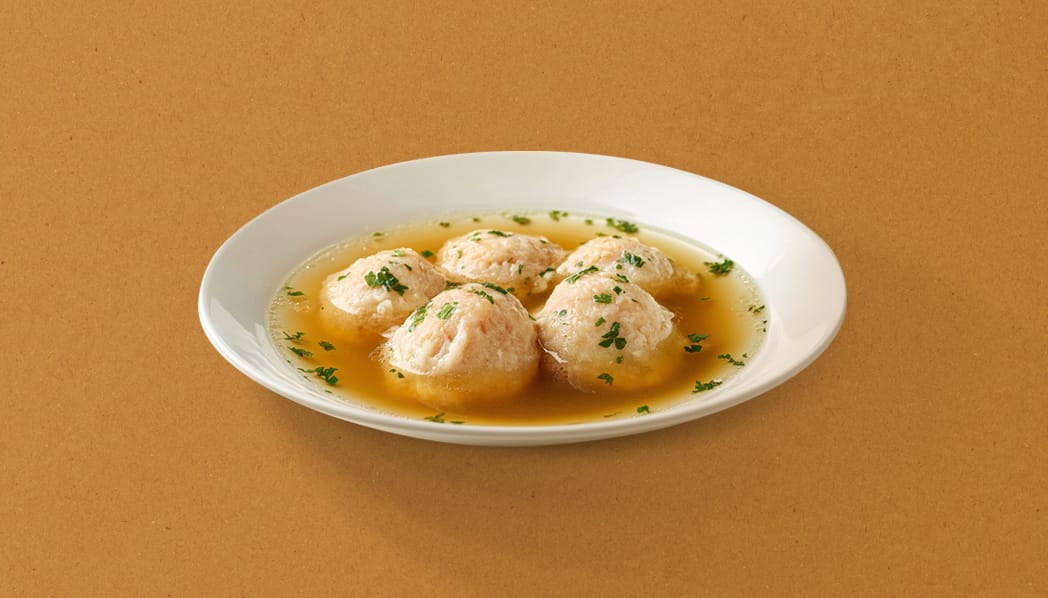
On the eve of Rosh ha-Shanah, I want to share with you a recipe for gefilte fish. A plain, brown Ashkenazi dish? Yes, but not quite.
This recipe has been passed down through my family on my mother’s side for as long as anyone can remember. Even during the most horrific times for Jews in the 20th century, the women in our family never stopped preparing this dish or sharing its recipe with the next generation. And now, just after leaving the bomb shelter, here I am, filling a pot to the brim, setting it on a low flame, and preparing for a three-hour vigil until the fish is ready. Enemies come and go, rockets fly and are intercepted, but before Rosh ha-Shanah, there’s always a pot of simmering gefilte fish on the stove.
This is a classic recipe of Ashkenazi cuisine—made with the simplest and most affordable ingredients. Nothing goes to waste: fish skins and bones go into the broth, the broth becomes fish jelly, the fish offal goes to the neighbourhood cat, and the swim bladder becomes a toy for the child. I asked the store to clean the fish for me these days, but everyone before me cleaned it themselves. My mother would give me the fish’s swim bladder to play with when I was a child, just as my grandmother did with her when she was little. I don’t know how far back this tradition goes, but I’m sure my grandmother wasn’t the first to invent this little game.
And gefilte fish carries within it three simanim—symbols of Rosh ha-Shanah. Fish, so that “we will be as many as fish”; the head, so that “we may be the head and not the tail”; and carrots, so that “good decrees are made for us, and bad ones are annulled,” sliced into coins to symbolize “abundance and prosperity.”
My grandmother sometimes added beets to the broth, which was a siman: “that our enemies and adversaries be disappeared.”
More stories
Over the past year, there have been too many losses. But those we hold dear will always stay with us, even when we cook their favorite dishes. This was Eyal’s favorite dessert, and we will remember him too.
My grandparents lived in Tbilisi (my grandfather was a Tbilisi Armenian, and my grandmother, a Jew on her mother’s side, evacuated to Georgia from Kharkiv as a teenager and stayed there). When I was little, in the 1980s, every winter, they would send us a package from sunny Georgia to our home in the Moscow suburbs.
For Vera, her Jewish identity was built primarily around food (editor’s note: we weren’t surprised at all!). The family’s traditional table included Hamantaschen made from soft, rich dough, which turned out to be quite unusual after moving to Israel, where they are almost always made with shortcrust pastry.

All recipes on the site come from our subscribers.
You can also become an author —
send your recipes and related stories to us via the bot.





Our projects
hopecooking 2©24
Go up